


Hey there! As a supplier of Wpc Hollow Decking, I often get asked whether this type of decking is environmentally friendly. Well, let's dive right into it and find out.
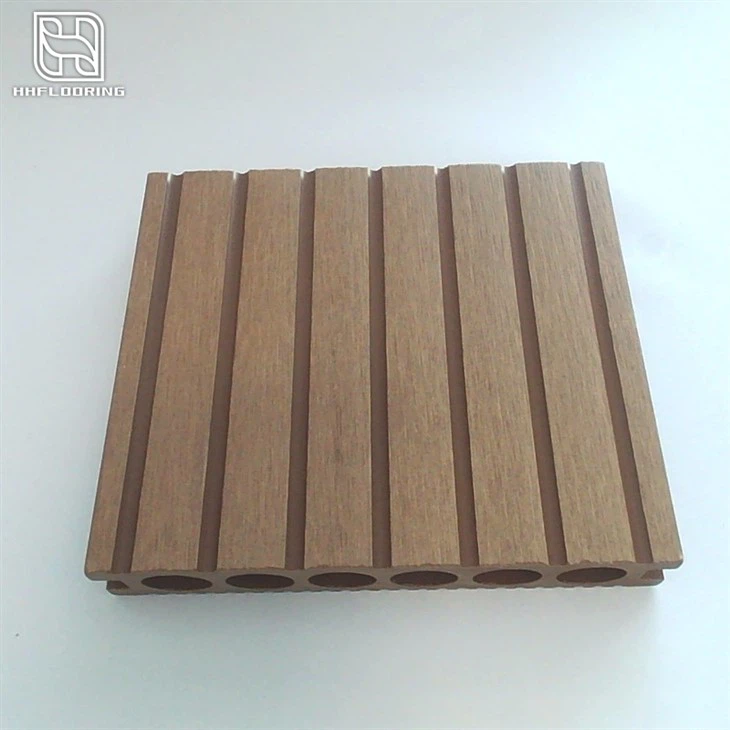
First off, let's understand what Wpc Hollow Decking is. WPC stands for Wood - Plastic Composite. It's a material made by combining wood fibers or flour with thermoplastics, along with some additives. The "hollow" part means that the decking boards have a hollow structure inside, which makes them lighter and more cost - effective.
One of the biggest environmental advantages of Wpc Hollow Decking is its use of recycled materials. A significant portion of the wood fibers used in WPC decking can come from recycled wood sources, like sawmill waste, old pallets, or other wood by - products. Instead of these materials ending up in landfills, they are given a new life in the form of decking boards. And the plastic component can also be recycled plastic, such as polyethylene or polypropylene. By using recycled materials, we're reducing the demand for virgin resources. For example, if we can use recycled plastic bottles and old wood scraps to make decking, we're saving on the amount of new plastic that needs to be produced from petroleum and the number of trees that need to be cut down for traditional wood decking.
Another aspect is its durability. Wpc Hollow Decking is known for its long lifespan. It's resistant to rot, decay, and insect damage. Traditional wood decking often needs to be replaced every 10 - 15 years due to these issues. But Wpc Hollow Decking can last much longer, sometimes up to 25 years or more. This means fewer resources are used in the long run. You don't have to keep cutting down new trees or producing new plastic for deck replacement as frequently. And since it doesn't require regular treatments with chemicals like some traditional wood decking does (to prevent rot and insects), there's less risk of those chemicals leaching into the environment.
In terms of energy consumption during production, WPC decking has an edge. The manufacturing process of Wpc Hollow Decking is generally more energy - efficient compared to some other building materials. The extrusion process used to make the decking boards is relatively straightforward and doesn't require extremely high temperatures or a lot of energy - intensive steps. This results in a lower carbon footprint during production.
Now, let's talk about the environmental impact during its use. Wpc Hollow Decking doesn't need to be painted or stained regularly like traditional wood. Painting and staining often involve the use of chemicals that can release volatile organic compounds (VOCs) into the air. VOCs are harmful to the environment and can also have negative health effects on humans. With Wpc Hollow Decking, you can avoid these issues and have a more eco - friendly outdoor space.
However, it's not all sunshine and rainbows. There are some potential environmental concerns with Wpc Hollow Decking. One of them is the fact that while it's made from recycled materials, it's still a composite material. At the end of its life cycle, recycling WPC decking can be a bit tricky. Unlike pure wood or pure plastic, which can be more easily recycled, the combination of wood and plastic in WPC decking makes the recycling process more complex. Currently, there aren't as many well - established recycling facilities for WPC materials. So, there's a risk that at the end of its useful life, Wpc Hollow Decking might end up in landfills.
Another concern is the additives used in the production of WPC decking. Some additives are used to improve the performance of the decking, such as UV stabilizers to prevent color fading and fire retardants. These additives, if not properly managed, could potentially have environmental impacts. For example, some fire retardants contain chemicals that might be harmful if they leach into the soil or water.
But overall, the pros of Wpc Hollow Decking in terms of environmental friendliness seem to outweigh the cons. The use of recycled materials, its durability, and lower energy consumption during production are significant environmental benefits. And as technology advances, we can expect to see improvements in the end - of - life recycling of WPC decking and more eco - friendly additives being used.
If you're in the market for decking and are concerned about the environment, Wpc Hollow Decking could be a great option for you. It offers a good balance between functionality, aesthetics, and environmental friendliness. And if you're interested in learning more about our Wpc Hollow Decking, we also have other great products like Wpc Teak Deck and Deking Wpc.
If you're thinking about purchasing decking for your next project, I'd love to have a chat with you. Whether you have questions about the environmental aspects, the installation process, or just want to get a quote, don't hesitate to reach out. Let's work together to create an eco - friendly and beautiful outdoor space.
References

- Industry reports on WPC decking production and environmental impact
- Studies on the durability and life - cycle assessment of WPC materials